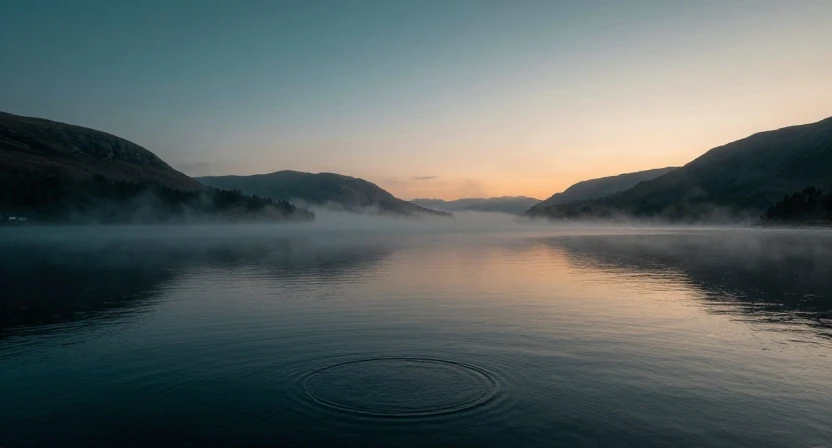
Stand on the shore of Loch Ness at dawn and you can feel why the story has lasted. The water is dark, the hills are quiet, and the loch is deeper than most people expect, plunging well beyond 700 feet. Nobody can see the bottom, and so the imagination fills it in.
The tale is far older than the modern craze. Stories of a creature in the River Ness go back to a sixth-century account of the monk Saint Columba. The legend roared back in 1933, after a new road along the shore brought more visitors and more sightings. A year later, the famous “Surgeon’s Photograph” fuelled the excitement, though it was later revealed to be a hoax. Even so, the mystery would not go away.
Science has taken its turn. Sonar sweeps have searched the loch for decades. In 2018, an international team led by geneticist Neil Gemmell sampled the water for environmental DNA and found a great deal of eel DNA, but no sign of a large reptile. Some people read that as the end of the story. Others noticed how little of an enormous, murky loch can ever be tested, and kept wondering.
That gap between what we know and what we can imagine is exactly where fiction thrives. A good Loch Ness story does not need to prove anything. It only needs to ask what would happen if a patient, serious scientist went looking and the loch answered.
That is the question at the heart of Loch Ness Has a Secret by Paula Fulton. Dr. Skye MacDougall saw something enormous in the water as a child, and she has paid for her curiosity ever since. When new footage sends her back with underwater drones, the legend turns out to be only the doorway to a much larger mystery.
If you have ever watched a lake at dusk and wondered what was down there, this is the book for you. Ready to dive in? Order your copy of Loch Ness Has a Secret in paperback or hardcover from the Book page.